
The Link Between Scalp Health and Hair Growth
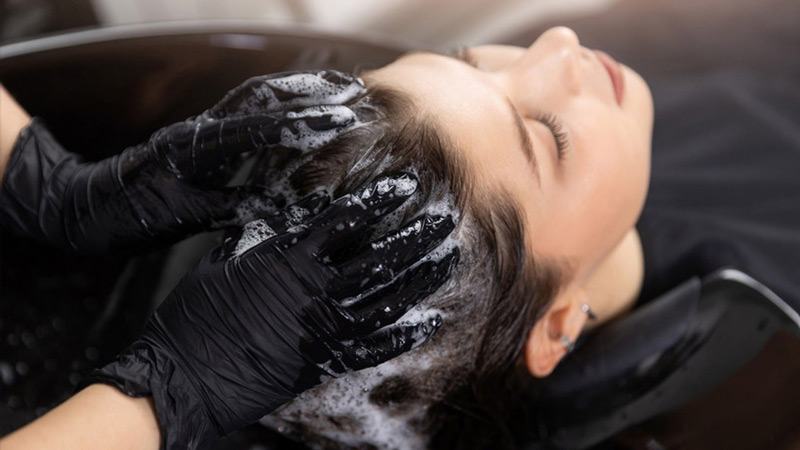
When people notice increased shedding or thinning hair, their attention naturally turns to the hair itself. They may start looking at hair-growth serums, supplements, PRP, medications or other treatments.
But there is another important part of the equation that is often overlooked:
The Scalp
At FREEDOMclinic Toronto, scalp health is an important part of our trichological approach to hair loss. While treating a scalp condition will not necessarily reverse genetic hair loss, maintaining a healthy scalp environment can help reduce inflammation, scaling, itching and buildup that may interfere with overall hair and scalp health.
If your scalp is constantly itchy, oily, flaky, inflamed or covered with buildup, it deserves attention — particularly if you are also experiencing hair loss.
Why Does Scalp Health Matter for Hair Growth?
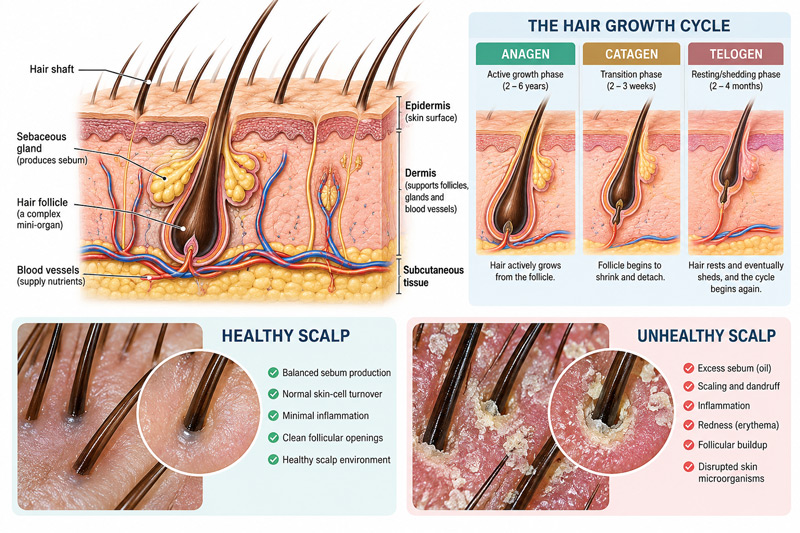
Every hair on your scalp emerges from a hair follicle, a complex mini-organ located within the skin.
The follicle continuously cycles through periods of anagen (active growth), catagen (transition) and telogen (resting/shedding). Hair growth is therefore much more complex than simply what we see above the surface of the scalp.
The skin surrounding these follicles also has its own biological environment, including sebaceous glands, microorganisms, keratinocytes, blood vessels and immune activity.
When the scalp is healthy, there is generally a balance of normal sebum production, skin-cell turnover and microorganisms.
When that balance becomes disrupted, we may see excess sebum, inflammation, erythema, scaling, dandruff and follicular buildup.
Can an Unhealthy Scalp Cause Hair Loss?
This depends on the underlying condition.
An unhealthy scalp does not automatically cause permanent hair loss, and conditions such as androgenetic alopecia are primarily driven by genetic and hormonal factors.
However, significant scalp inflammation can coexist with hair loss and may contribute to symptoms such as itching, irritation, excessive scratching and increased shedding.
This is why someone experiencing both an itchy scalp and hair loss should not assume the two are unrelated.
From a trichological perspective, we want to determine whether we are looking at a primary scalp disorder, a hair-loss disorder, or — as we frequently see — both occurring at the same time.
Seborrheic Dermatitis: One of the Most Common Scalp Conditions We See
One of the most frequent scalp conditions identified during consultations at FREEDOMclinic is seborrheic dermatitis.
Seborrheic dermatitis is an inflammatory condition that commonly affects areas of the skin with greater sebaceous activity.
On the scalp, signs may include:
- Excessive oil or sebum
- Dandruff and scaling
- Redness or erythema
- Itching
- Inflammation around the follicles
- Yellowish or greasy scale
- Scalp sensitivity
- Recurrent buildup
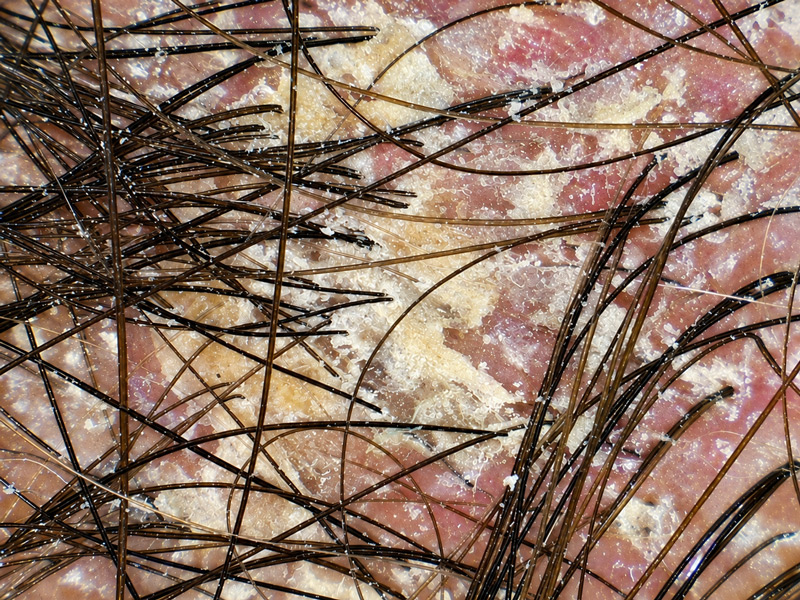
Some patients have obvious dandruff, while others may have considerable perifollicular inflammation and sebum accumulation that becomes much more apparent under magnification.
What Does an Itchy Scalp Have to Do With Hair Loss?
An occasional itch is usually nothing to worry about.
Persistent itching is different.
An itchy scalp with hair loss may indicate inflammation or another scalp disorder that warrants further investigation. Constant scratching can also physically traumatize the scalp and hair shafts, potentially contributing to breakage and irritation.
The important point is that itching is a symptom, not a diagnosis.
It may be associated with seborrheic dermatitis, psoriasis, contact dermatitis, excessive product buildup or other inflammatory conditions.
If itching is persistent, determining the cause is more useful than simply trying to suppress the symptom.
The Problem With Scalp Buildup
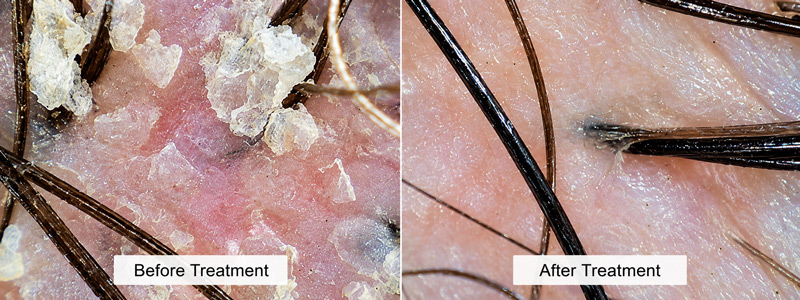
During microscopic scalp examinations, we frequently see significant accumulations of sebum, keratin, dead skin cells and hair-product residue.
This material can collect around the follicular openings and along the scalp surface.
Some buildup is normal. The problem occurs when it becomes excessive or is accompanied by inflammation, itching and scaling.
This can be particularly noticeable in people who shampoo infrequently, use large quantities of styling products, have naturally high sebaceous activity or have an underlying scalp condition.
Deep Cleansing With Our Residue on Scalp Treatment (ROST)
For patients with significant scalp buildup, scaling and excess oil, we may recommend our Residue on Scalp Treatment (ROST).
This is an in-clinic deep-cleansing scalp treatment designed to help remove accumulated sebum, scale, dead skin cells and product residue from the scalp.
The purpose is to create a cleaner scalp environment and make ongoing scalp management easier.
ROST can be particularly useful when microscopic examination reveals substantial buildup that is difficult to adequately remove through the patient’s regular shampooing routine.
It is important to understand that ROST is not a treatment for androgenetic alopecia itself. Rather, it addresses the scalp environment as one component of a broader hair and scalp treatment strategy.
Medicated Shampoo Can Be an Important Part of Scalp Management
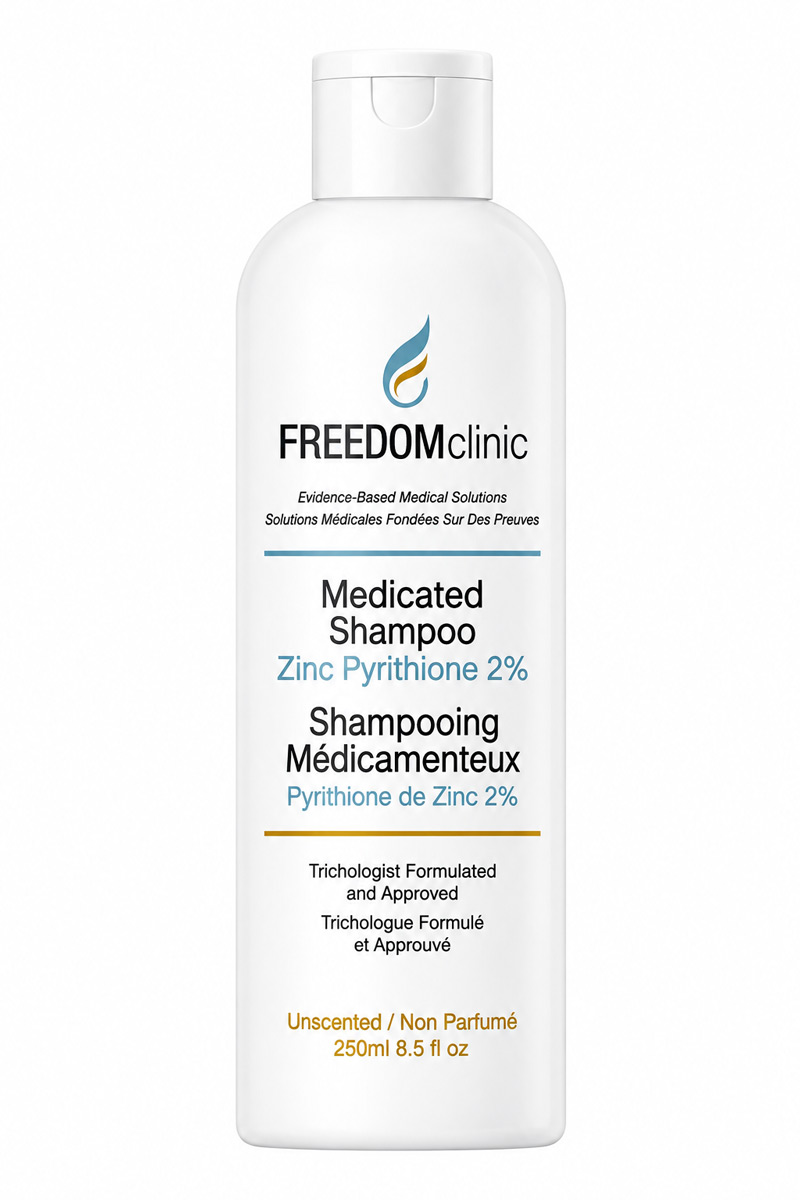
For patients experiencing dandruff, excessive oil, scaling or seborrheic dermatitis, we may also recommend FREEDOMclinic Medicated Shampoo with 2% Zinc Pyrithione.
Zinc pyrithione has antimicrobial and antifungal properties and has traditionally been used in the management of dandruff and seborrheic dermatitis.
Depending on the condition of the scalp, we generally recommend using the medicated shampoo two to three times per week, although frequency can be adjusted according to the individual.
For best results, the shampoo should be worked directly into the scalp rather than simply the hair, massaged thoroughly and allowed to remain on the scalp for approximately 2–3 minutes before rinsing.
This contact time is important when using a medicated shampoo.
Why Microscopic Scalp Analysis Makes a Difference
It can be difficult to properly assess scalp health simply by looking at the hair in a bathroom mirror.
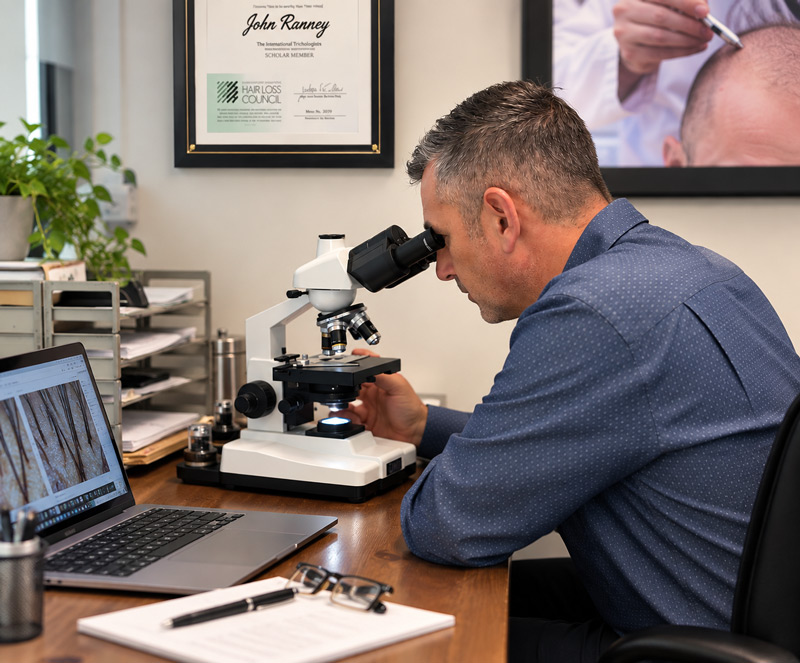
At FREEDOMclinic, John Ranney, Certified Clinical Trichologist, uses microscopic scalp and hair analysis as part of many hair-loss consultations.
Magnification allows us to examine features such as:
Sebum accumulation, scaling, follicular inflammation, hair-shaft diameter variation, follicular miniaturization, vellus hairs, follicular ostia and other changes within the scalp environment.
This is particularly useful because a patient may have more than one condition.
For example, we frequently see patients who have androgenetic alopecia together with seborrheic dermatitis.
Treating the seborrheic dermatitis will not eliminate the genetic component of androgenetic alopecia. Likewise, treating only the androgenetic alopecia while ignoring a significantly inflamed, itchy scalp may leave an important scalp condition unmanaged.
A Healthy Scalp Is One Part of Healthy Hair Growth
There is no shampoo or scalp treatment that can cure every form of hair loss.
But scalp health should not be ignored.
Managing inflammation, excessive sebum, dandruff, scaling and buildup can be an important part of maintaining a healthier scalp environment — particularly when scalp problems occur alongside androgenetic alopecia or increased shedding.
This is one of the reasons our approach at FREEDOMclinic extends beyond simply looking at how much hair a patient has lost.
We want to understand what is happening at the scalp and follicular level.
Experiencing an Itchy Scalp, Dandruff or Hair Loss?
If you are experiencing persistent itching, excessive oil, dandruff, scalp buildup, inflammation or hair loss, a detailed scalp assessment can help determine what is actually happening.
At FREEDOMclinic Toronto, we use trichological and microscopic analysis to evaluate both the hair and scalp before recommending treatment.
Depending on your findings, recommendations may include changes to your shampooing routine, FREEDOMclinic 2% Zinc Pyrithione Medicated Shampoo, an in-clinic ROST deep-cleansing scalp treatment, hair-loss therapies or referral for medical assessment when appropriate.
Start With Your Scalp
Book a Hair & Scalp Consultation at FREEDOMclinic Toronto and find out what may be contributing to your scalp symptoms and hair concerns.