
Is Your Skin Ageing 10 Years Faster Than It Should Be?
Is Your Skin Ageing 10 Years Faster Than It Should Be?
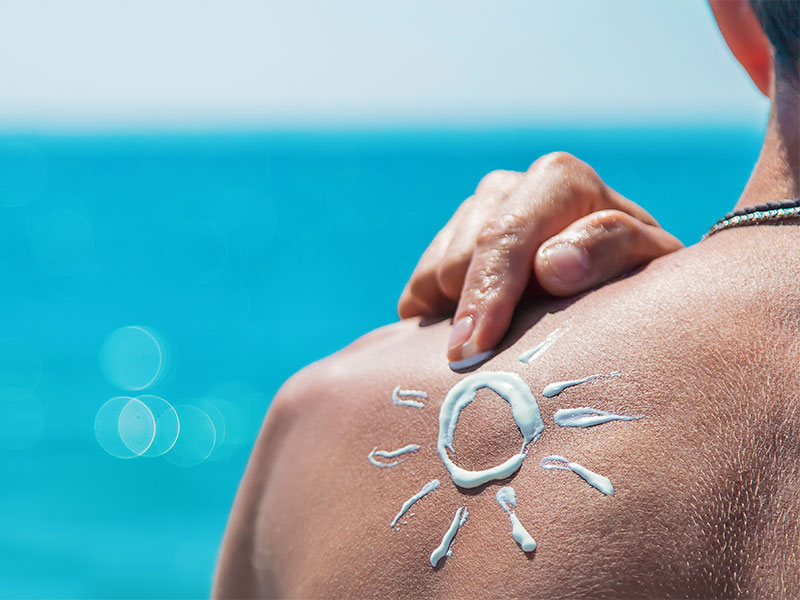
Most people think sunscreen is optional — a beach-day afterthought. The science says otherwise. Daily SPF is the single most evidence-backed anti-ageing intervention available, and Toronto’s UV index is higher than most people realize, even in winter.
Whether you’re 22 or 62, whether it’s July or January, whether you’re heading to the beach or sitting next to a window at your desk — UV radiation is reaching your skin. At Freedom Clinic Toronto, our medical estheticians see the cumulative effects of unprotected sun exposure every single day: premature fine lines, hyperpigmentation, textural changes, and elevated skin cancer risk. The good news? It is almost entirely preventable.
This guide covers everything you need to know about sunscreen — the science, how to choose the right formula for your skin, how to apply it correctly, the myths holding people back, and the professional-grade options our clinic carries to make daily protection effortless.
The Science of UV Damage
The sun emits two types of ultraviolet radiation that reach the Earth’s surface and interact with your skin in distinct ways:
UVA Rays — The Aging Ray
Penetrate deep into the dermis, degrading collagen, and elastin. Present year-round, all day, and capable of passing through glass. Account for up to 95% of UV radiation reaching Earth.
UVB Rays — The Burning Ray
Affect the skin’s surface layer. Responsible for sunburn, DNA damage, and the majority of skin cancer development. More intense in summer and at higher altitudes.
When UV radiation hits skin cells, it triggers direct DNA damage — specifically forming thymine dimers in your DNA strand. Your body has repair mechanisms, but over time these systems become overwhelmed. The result: mutations in skin cells, accelerated breakdown of structural proteins, and a cascade of oxidative stress that manifests as visible ageing and, in some cases, malignancy.
Key Research Finding
A landmark study published in the Annals of Internal Medicine found that daily sunscreen use significantly slows skin ageing. Participants who applied SPF daily showed 24% less skin ageing after 4.5 years compared to those who used it only occasionally — a powerful, measurable effect from one simple habit.
How to Choose the Right Sunscreen
Walk down any pharmacy aisle and you’ll find dozens of SPF products. Knowing what to look for — and what to avoid — makes all the difference in both effectiveness and wearability, which is what determines whether you’ll actually use it daily.
Mineral vs. Chemical: Understanding the Difference
Mineral Sunscreen
Contains zinc oxide and/or titanium dioxide. Sits on top of skin and physically deflects UV rays. Works immediately on application. Ideal for sensitive skin, rosacea, and post-procedure skin. Our choice: EltaMD UV Physical.
Chemical Sunscreen
Uses filters like avobenzone and octinoxate to absorb UV energy and convert it to heat. Thinner texture, more cosmetically elegant. Requires 20 minutes to activate. Best for oily or acne-prone skin types.
Neither is universally superior — the best sunscreen is the one you’ll wear consistently. Hybrid formulas (like many in the EltaMD and SkinCeuticals lines we carry) combine both technologies for broad-spectrum coverage with a wearable finish.
What to Look for on the Label
Broad-Spectrum
Non-negotiable. This means the product protects against both UVA and UVB. SPF alone only measures UVB protection.
SPF 30 Minimum (SPF 50 Preferred)
Dermatologists and medical estheticians recommend SPF 30 as a baseline for daily use and SPF 50 for outdoor activity or extended exposure.
Water Resistance (if Active)
If you exercise, sweat, or swim, choose a formula rated water-resistant for 40 or 80 minutes and reapply after.
Non-Comedogenic
Especially important for acne-prone skin. EltaMD’s UV Clear is specifically formulated for blemish-prone and post-acne skin.
How to Apply Sunscreen Correctly
Even the best sunscreen fails if it’s applied incorrectly. Most people use a fraction of the amount needed — which means the SPF they’re actually getting is far lower than the label promises.
- Apply to clean, moisturized skin
For most skin types, apply sunscreen as the last step of your morning skincare routine, after moisturizer and serums have absorbed. Mineral sunscreen goes last; some chemical sunscreens work best applied closer to skin before moisturizer — check your specific formula. - Use enough — the “two-finger rule”
For the face and neck, apply a full quarter-teaspoon (roughly two finger-lengths of product). Studies show most people apply only 25–50% of the required amount, dramatically reducing effectiveness. For the body, use approximately one ounce (a shot glass worth) to cover exposed areas. - Don’t skip the ears, neck, and hands
These areas are among the most commonly missed and among the first to show signs of photoageing. The backs of hands receive enormous cumulative UV exposure from driving alone. - Reapply every 2 hours when outdoors
Sunscreen degrades with UV exposure and perspiration. If you’re spending time outside, reapplication is essential — even with SPF 50. SPF powder or spray formulas make midday reapplication over makeup straightforward. - Apply year-round, not just in summer
UVA rays are present at consistent levels throughout the year in Toronto. Winter clouds block very little UV radiation, and snow reflects up to 80% of UV rays — potentially doubling your exposure. Daily SPF is a 365-day commitment.
Sunscreen Myths vs. Facts
Misinformation about SPF is widespread — and it keeps people from protecting their skin. Here’s what our medical estheticians hear most often, and the truth behind each claim.
Myth: “I don’t need sunscreen on cloudy days.”
Up to 80% of UV rays pass through cloud cover. Overcast skies give a false sense of security — your skin is still being exposed to the UVA rays responsible for ageing and DNA damage. Apply SPF rain or shine.
Myth: “My foundation has SPF — that’s enough.”
SPF in makeup is rarely applied in sufficient quantity to deliver meaningful protection. You would need to apply 7–10 times the normal amount of foundation to reach the labelled SPF. Makeup SPF is a bonus, not a replacement for a dedicated sunscreen layer.
Myth: “Darker skin tones don’t need sunscreen.”
Melanin does offer some natural UV protection — roughly the equivalent of SPF 13 — but it does not prevent UV-induced DNA damage, photoageing, or skin cancer. People with darker skin tones are also more susceptible to hyperpigmentation triggered by UV exposure, making daily SPF critical for an even complexion.
Myth: “Sunscreen blocks vitamin D entirely.”
Correct application of sunscreen reduces (but does not eliminate) vitamin D synthesis, and real-world usage means some UV still reaches the skin. For those concerned about vitamin D levels, oral supplementation is far more reliable and controllable than relying on unprotected sun exposure, which carries far greater health risks.
Myth: “Higher SPF means I can apply less or skip reapplication.”
SPF measures the level of protection per application — not the duration. SPF 100 still needs to be reapplied every 2 hours. It also still requires proper quantity to be effective. The number multiplies protection level, not time.
Fact: Sunscreen is the most effective anti-ageing product in existence.
No serum, retinol, or treatment can outperform the damage prevention that consistent daily SPF provides. Prevention will always be more effective than correction. Starting — or restarting — a daily sunscreen habit is the single highest-impact change you can make to your skincare routine at any age.
Professional SPF at Freedom Clinic
We’ve curated our sunscreen offering around two brands trusted by dermatologists and medical estheticians worldwide — because the quality of your SPF matters as much as the habit of wearing it.
EltaMD
UV Clear Broad-Spectrum SPF 46
The #1 dermatologist-recommended sunscreen in North America. Lightweight, non-comedogenic, and fortified with niacinamide. Ideal for acne-prone, sensitive, and post-treatment skin. Available at Freedom Clinic Toronto.
EltaMD
UV Physical Tinted SPF 41
100% mineral broad-spectrum protection with a light tint that enhances natural skin tone. Perfect for redness-prone and sensitive skin types. Zero irritating chemical filters.
SkinCeuticals
Physical Fusion UV Defense SPF 50
Universally flattering tinted mineral formula. Ultra-light fluid texture with antioxidant support. Beloved by medical estheticians for its elegant finish and superior protection level.
SkinCeuticals
Clear Daily Soothing UV Defense SPF 50
is a lightweight, non-greasy hybrid sunscreen specifically formulated for sensitive and redness-prone skin. Not Sure Which SPF Is Right for You?
Our medical estheticians in Toronto provide personalized skincare consultations to match you with the right sunscreen for your skin type, concerns, and lifestyle — and integrate it seamlessly into a complete skin health routine.